Does it matter if your flight sim gear is FAA-certified?
FAA approval covers complete training devices, not the panels you can buy. Here is what you can log, what it costs, and where the rules leave Australian recreational pilots.
For most people building a home sim, FAA certification changes nothing. It governs the time you can log, and little else. It matters in two situations: when you want hours in a device to count toward a rating or a currency requirement, and when the school or program you train with needs the device named in its approved syllabus.
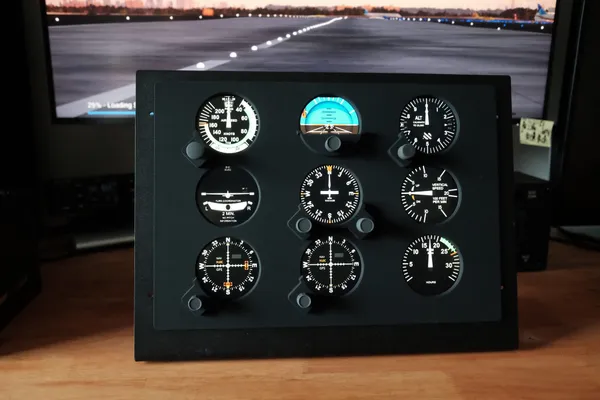
The question shows up in sim forums every few weeks, usually attached to a US$500 panel that looks like a real instrument cluster. The honest answer is that no panel can carry that approval on its own, however good it is.
What the FAA actually approves
Approval belongs to a complete device configuration. The FAA's advisory circular on aviation training devices puts it plainly: the FAA approves each configuration, and every unit built to it has to be identical. Any change the manufacturer makes without review can end the approval, and the operator has to keep the approval letter and the qualification guide on site.
Two families of device sit inside that system. Full flight simulators and flight training devices are qualified under Part 60 of the regulations. Aviation training devices, the basic and advanced kinds advertised to individual pilots, are approved separately under 14 CFR 61.4(c) and hold a manufacturer's approval letter valid for 60 months. The FAA's published list of approved devices carries the reminder that aviation training devices are not flight training devices or full flight simulators.
That distinction explains why hardware marketing gets confusing. A panel or a control unit cannot be approved by itself, because the approval covers the whole device, including the flight model that drives the instruments.
How much sim time you can actually log
The ceilings are low and specific, which is the part most buyers miss.
- Instrument rating: up to 10 hours in a basic device, or 20 in an advanced one, with an authorized instructor and FAA-approved tasks (14 CFR 61.65)
- Commercial certificate: up to 50 hours toward the total
- Private certificate: up to 2.5 hours
- Airline transport pilot: excluded, with the regulation stating that neither a flight training device nor an aviation training device may be used for the 50-hour requirement
- Instrument currency: the full requirement, in any combination of aircraft and device, with no hourly cap written into the rule (14 CFR 61.57)
Where device time stops matters just as much. The 90-day passenger-carrying currency needs an aircraft, or a device approved for landings and used inside a training-center course. The instrument proficiency check cannot be done in a basic device at all, and an advanced one cannot complete it. The flight review has to happen in an aircraft. Cross-country, solo, night and landing requirements stay in the aircraft, and none of this time counts as flight time.
The two questions that decide it for you
First, will you ever need that time to count? Second, does the school or program you train with require it?
If the answer to both is no, certification is not a factor in what you buy, and the money is better spent on the hardware that changes how you fly — which is what Magenta's guide to building a home flight sim rig for pilot training is for. Whether the dials sit where the real ones sit, and whether the panel mounts at a height that lets you keep your eyes outside rather than hunting across a desk, will shape your habits for years.
If the answer to either is yes, you are shopping for an approved device, and that market starts around US$9,000 (Redbird's published pricing).
What the letters cost
Approved devices run from roughly US$9,000 for a basic trainer to six figures for a full simulator. FlightSimBuilder lists a basic device at US$17,500. For an existing owner, RealSimGear sells the approval step as a US$3,500 addition to a US$19,000 system, which puts a number on the paperwork itself: about a fifth of the system cost.
The consumer tier sits far below that. An analogue six-pack panel costs US$400 to US$500, with the Altimeter Motives SixPackPlus under US$400, a Flight Sim Wings six-pack near US$470, FlightSimBuilder's Steam Gauges at US$480, and MOZA's MGX1000 glass unit at US$450. Every panel Magenta has tested in that tier is scored against the same public rubric, the Magenta Standard.
The extra money buys a qualification process rather than better instruments: per-model FAA review, a quality guide that has to travel with every unit, and production runs small enough that the paperwork spreads across few sales.
What applies in Australia and Asia
This is where the American guides stop and the useful part starts.
Australia credits devices qualified by the FAA, because it recognizes the United States as a foreign state whose qualifications it accepts (CASR Part 61). That covers the full flight simulator and flight training device categories. An FAA aviation training device approval sits in a different category, and there is no verified route for it into Australian credit.
For an Australian private pilot licence, the requirement is 40 hours of aeronautical experience with at least 35 hours flown in the aircraft, which leaves roughly five hours of simulated time in an approved device.
Australia is more generous than the United States in two places. An approved flight simulator can satisfy the 90-day passenger-carrying recency, and it can be used for the flight review, both of which require an aircraft under FAA rules.
For recreational flying, the answer is simpler. The RAAus Flight Operations Manual contains no provision crediting simulator time toward a Pilot Certificate or an endorsement, and RAAus logbook guidance separates simulated time from flying hours rather than adding them. If you fly under RAAus, no panel you buy will change your logbook, and the case for spending rests entirely on the habits the hardware builds. The exams in that pathway test the knowledge a sim can genuinely sharpen.
Why the market has split in two
Institutional buyers and individual pilots are buying different things.
Flight schools and university programs write FAA approval into tenders as a pass or fail line, and price decides only between compliant bids. A California school district's aviation training equipment tender requires that the device "must be Federal Aviation Administration Approved" before anything else is considered, and it awards to the lowest bidder that meets the specification.
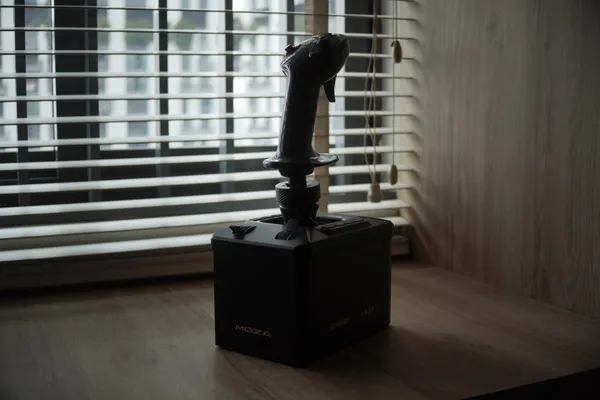
Individual pilots need no approval, so cost and features decide, which is the lane Chinese manufacturers have entered. MOZA sells a glass panel unit at US$450 with no certification ambitions in its material, and its products compete for the same desk space and budget as approved-device makers' entry hardware.
Some makers sell in both lanes. FlightSimBuilder's own ladder places steam-gauge panels at its entry level, around a US$9,000 complete setup, and describes panels as FAA-certifiable only from its third tier, above US$18,000. Their one approved device is listed at US$17,500.
Worth stating plainly: no certified manufacturer I could find blames cheaper rivals publicly for price pressure. The two lanes solve different problems, which is why certification has stayed a compliance story rather than a marketing one.
Can I log sim time toward a private pilot certificate?
Up to 2.5 hours, in an approved device, with an authorized instructor giving the training. Everything else has to be flown in an aircraft.
Is my home simulator FAA approved if the hardware is approved?
No. Approval covers a complete device configuration. A panel, a monitor or a control unit cannot carry it on its own.
Does an FAA-approved simulator count toward Australian training?
A device qualified in the full flight simulator or flight training device categories can be recognized through Australia's rules on foreign qualifications. An aviation training device approval has no verified route into Australian credit, and RAAus credits no simulator time at all.
Can I keep my instrument currency in a home sim?
Only in an approved device. Home practice still builds the skill, and it cannot be logged as instrument experience.
Why do approved devices cost so much more than consumer panels?
The manufacturer carries the qualification cost for each configuration, has to keep every unit identical, and sells into a small institutional market. That cost lands in the price of the device rather than in the instruments inside it.
Certification answers a narrow question: whether the FAA will credit the time you spend in a device. If you need that credit, buy the approved device and treat everything else as practice equipment. If you do not, put the money into hardware that builds the right habits, and fly the hours you can log.