
Flight school profiles
We help prospective pilots make good decisions about where to train in the Asia-Pacific.
Jump to the profiles →The public-information principle
We only review schools whose pricing, syllabus, instructors, and policies are publicly available. This is intentional. A student performing due diligence can only base their decisions on the information the school chooses to make accessible. If key details require a sales call or an inquiry form, the information is not public.
The evaluation pillars
Our reviews cut through the marketing. Every school is audited against five core pillars designed to reveal the operational reality of the training environment.
Pathway clarity
Does the school clearly articulate the steps, timeline, and requirements from zero hours to license? Ambiguity in the syllabus usually leads to wasted hours in the air.
Cost integrity
We evaluate whether the advertised price reflects the realistic cost of completion. Hidden fees, unrealistic minimums, and opaque landing charges are penalized heavily.
Training environment
Fleet availability, maintenance transparency, and the surrounding airspace context. A cheaper hourly rate is a false economy if you spend half your time transiting to the training area.
Instructor quality
We look at instructor retention, experience levels, and standardisation. Are you being taught by a unified flight department, or random freelancers building their own hours?
Overseas readiness
This is an APAC-focused publication. We heavily weight this pillar for audiences flying in from Singapore, Hong Kong, Malaysia, Thailand, and elsewhere. We assess visa support, intensive course availability, block-booking policies, and local accommodation logistics.
The verdict scale
Strong
Delivers on its promises with high transparency. Recommended without significant reservations.
Adequate
Functionally competent but with caveats. Requires the student to manage their own progress actively.
Weak
Significant issues with transparency, cost structure, or training continuity. Proceed with caution.
Exceptional
Reserved strictly for clear outperformers that redefine what students should expect from a flight training organization.
The disclosure standard
Trust is our only durable asset. Our disclosure standard is simple:
1. Commercial transparency: We name any commercial relationship or affiliate agreement upfront, at the top of the review.
2. No pre-publication review: We do not share drafts with schools before publication. The final assessment is ours alone.
3. Corrections welcome: If a school believes a published review contains a factual error, we welcome the correction. Where we agree an error was made, we will update the text and log the change.
Email us →Flight schools
Our latest evaluations of flight training organizations across the region.
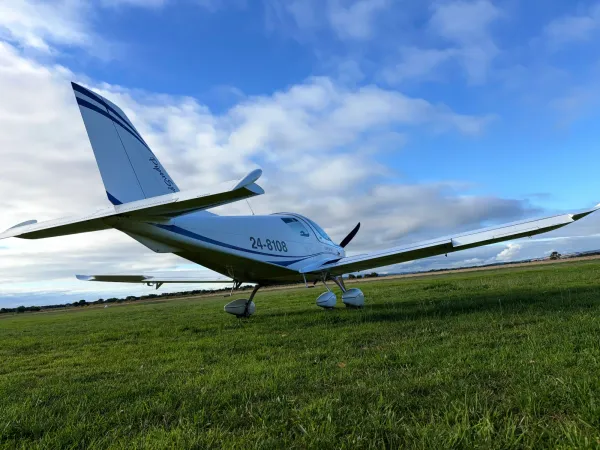
Lite Air Flying Training (Aldinga, Australia)
A methodical, structured school with a genuinely interesting training environment — multiple runways, right-hand circuits on three directions, and a steam-gauge SportCruiser alongside a glass-cockpit option and a tailwheel Carbon Cub.
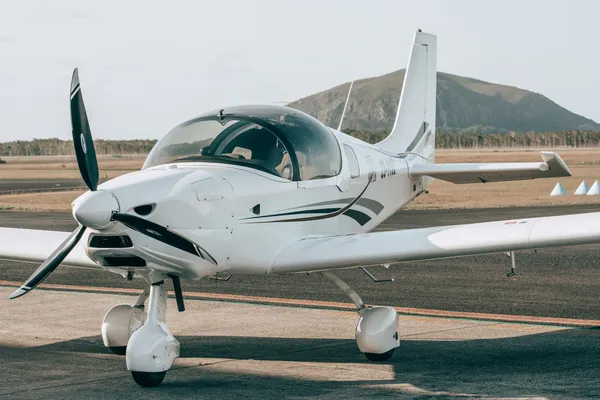
Sunshine Coast Aero Club (Marcoola, Australia)
SCAC has been training pilots since 1959 from a towered Class D field at YBSU. Its draw is the airspace — RPC students operate in and out of controlled airspace, with onward GA training (RPL→CPL) routed through partner Inspire Aviation.
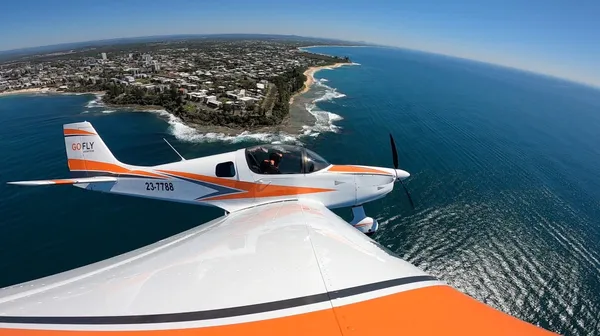
GoFly Aviation (Sunshine Coast, Australia)
GoFly runs a three-week, all-inclusive RPC pathway at Caloundra Airport on Queensland's Sunshine Coast — purpose-built for Singaporean and Hong Kong students, capped at two at a time, and priced at AU$385/hr with briefings, exams, and landing fees included.
Run a flight school?
Get a featured listing with a verified school profile and a Magenta Standard five-pillar evaluation.
What's coming next
We are actively building our coverage database. Expect comprehensive reviews of flight schools across Australia, the Philippines, Thailand, and beyond in the coming months.
