
Lite Air Flying Training (Aldinga, Australia)
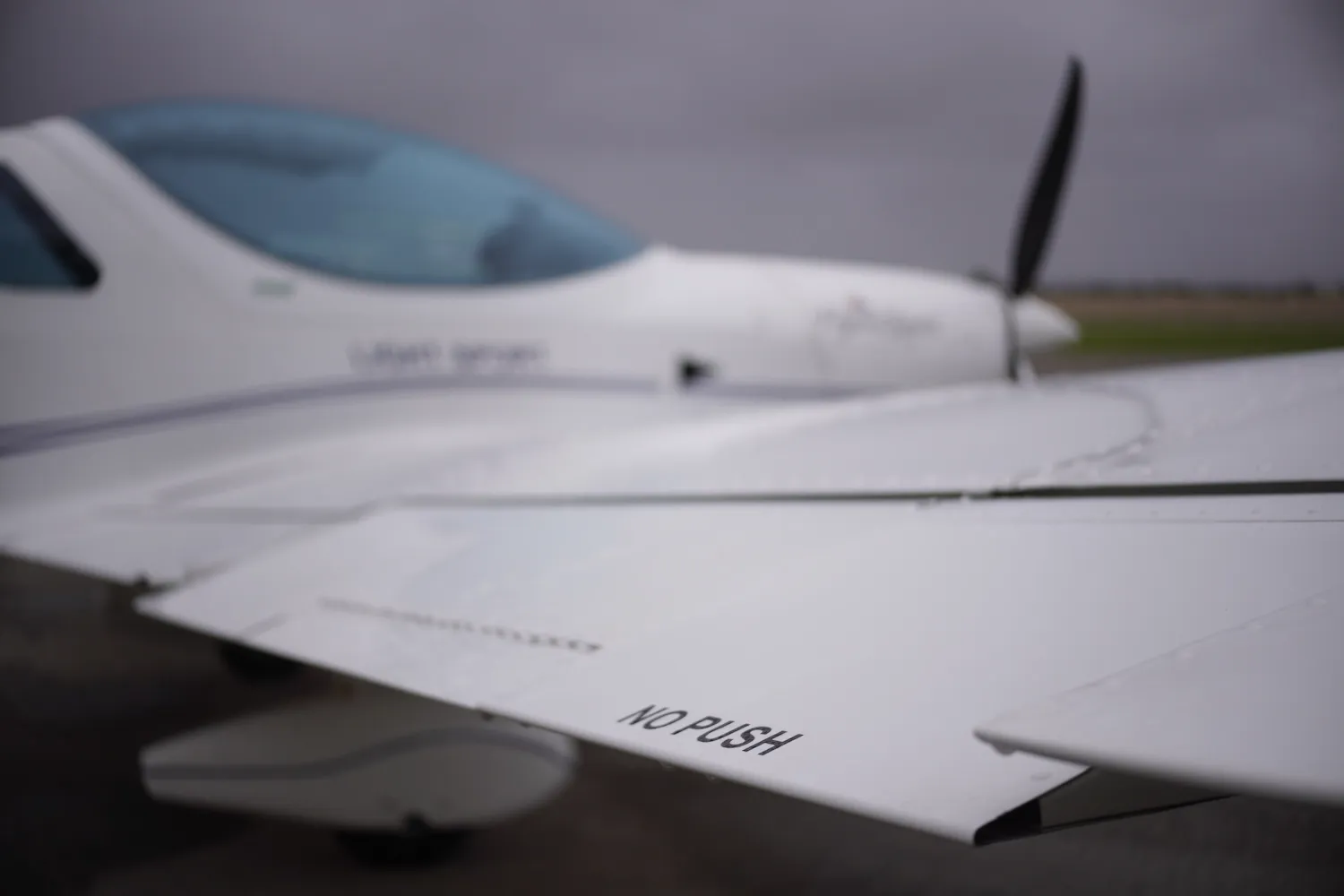
A methodical, structured school with a genuinely interesting training environment — multiple runways, right-hand circuits on three directions, and a steam-gauge SportCruiser alongside a glass-cockpit option and a tailwheel Carbon Cub.
The school in one paragraph
Lite Air Flying Training is a small RAAus-only school at Aldinga Airfield in South Australia, about 45km south of Adelaide. It operates two aircraft types — a CZAW SportCruiser (nosewheel, available in both steam-gauge and glass-cockpit configurations) and a CubCrafters Carbon Cub (tailwheel) — giving students a genuine choice between a modern LSA and a traditional stick-and-rudder taildragger. Aldinga is uncontrolled Class G airspace with multiple runways and right-hand circuits required on RWY 18, 21 and 26 — a distinctive setup that builds adaptability early but also demands more from a student's positional awareness. The school is run by Ron Logan, a former HSBC banker turned CFI, regarded as a legendary figure in the local flight community. The site recommends a fortnightly lesson rhythm, but in practice the school was flexible enough to accommodate a Singapore-based student who needed to complete his passenger endorsement within a 10-day window. Weather cost about 3 of those days — an honest constraint at any coastal airfield.
How we assess schools
Magenta Standard profiles evaluate flight schools across five pillars. Each pillar maps to a decision a prospective student is actually making.
- Pathway clarity — whether a student can map the full route from enrollment to license: hour ranges, exams, endorsements, what comes after RPC
- Cost integrity — whether pricing is complete and upfront, with all-in numbers a student can budget against without phoning the school
- Training environment — whether the airport, airspace, fleet, and weather actually support efficient training, or eat into the hours a student is paying for
- Instructor quality — who teaches, what their qualifications are, and how supervision is structured
- Overseas readiness — for schools accepting international students: visa guidance, accommodation, transfers, pre-arrival theory, and cap discipline
Pillar 1 — Pathway clarity
Verdict: Adequate.
Lite Air's website describes the RPC pathway with honest hour ranges: minimum 20 hours flying (5 solo), solo typically achieved between 12 and 15 hours, passenger endorsement adding 5 hours. The school is upfront about variability — "most students will take a little longer and this will depend on aptitude, and consistency of training." Navigation endorsement and biennial flight reviews are offered.
What the website doesn't capture is the school's flexibility on scheduling. In practice, the author contacted Lite Air months before arriving in Adelaide with a specific constraint: approximately 10 days to complete a passenger endorsement starting from an existing RPC. The school structured the time to maximize air exposure, and weather accounted for about 3 grounded days within that window — consistent with the site's acknowledgment that weather can affect the timeline.
What is not published: a syllabus breakdown or weekly schedule. The site doesn't lay out what each lesson covers or how the RAAus competency framework maps to the training sequence. Theory is described as self-study with textbooks, with radio, procedures, navigation, and human factors covered during poor-weather ground sessions. The BAK exam is mentioned but not detailed. Onward GA pathways (RPL, PPL, CPL) aren't described — students wanting to go beyond recreational flying would need to research separately.
Pillar 2 — Cost integrity
Verdict: Adequate.
Hourly rates are published and easy to find: AU$265/hr for the SportCruiser, AU$275/hr for the Carbon Cub. The trial introductory flight is AU$253. Hire rates are listed separately at AU$200/hr and AU$215/hr respectively, with a note that these are discounted for Aldinga Aero Club members — a AU$55 annual membership.
What is not published: what the hourly rate includes. The site does not state whether briefings, landing fees, or exam fees are included or billed separately. The BFR pricing is listed at AU$75/hr but carries an asterisk: "Rate is in your own aircraft, additional hourly rate applies for Lite Air Aircraft" — the total cost for a BFR in a school aircraft is not given.
On landing fees: the Aldinga ERSA lists AU$5 for single-engine and AU$10 for twin, waived with fuel purchase. This is an airport charge, not a school charge, but it's a real cost a student should factor in.
No school can honestly promise a single complete cost, because students progress at different speeds. Lite Air publishes the per-hour number but doesn’t mention package pricing, payment schedule, or RAAus membership or Aldinga Aero Club fees. The author's personal experience was fuss-free — straightforward pay-as-you-go billing with a credit card.
Pillar 3 — Training environment
Verdict: Strong.
Aldinga Airfield (YADG) is uncontrolled Class G, but it's more complex than a typical regional strip. Multiple runways are available, and right-hand circuits are required on RWY 18, 21 and 26 per the Airservices ERSA. For a student pilot, that means managing non-standard circuit directions alongside the usual radio calls and traffic scan. The ERSA explicitly cautions that multiple runways may be in use simultaneously, a reality of a shared training airfield.
The benefit of multiple runways is genuine flexibility. Instructors can pick the runway that best suits the wind, and crosswind training doesn't depend on weather providing a crosswind component — there's almost always a runway that delivers one. The right-hand circuits add a layer of cognitive load that most training airfields don't offer, which can accelerate a student's adaptability but also extend early-stage learning time.
Lite Air shares the airfield with other operators (notably Adelaide Biplanes). The author's experience was that traffic was light enough that competition for airspace wasn't a factor. But a prospective student should know it's not a single-operator field and things might get busy.
The curfew is a real logistical constraint: no takeoff or landing between 2200–0600 (daylight saving) or 2200–0700 (other times), circuits only 0800–2000 Mon–Sat and 0900–2000 Sunday, and circuits prohibited on most public holidays. For a student on an intensive timeline, these are hard boundaries.
Weather is the school's own acknowledged risk. The author lost about 3 days out of 10 to weather in April (southern autumn), which tracks with the site's honest admission that conditions can interrupt a timeline. The school used grounded days for ground instruction — procedures, navigation planning — which the author found productive but is worth noting as a pattern, not a guarantee.
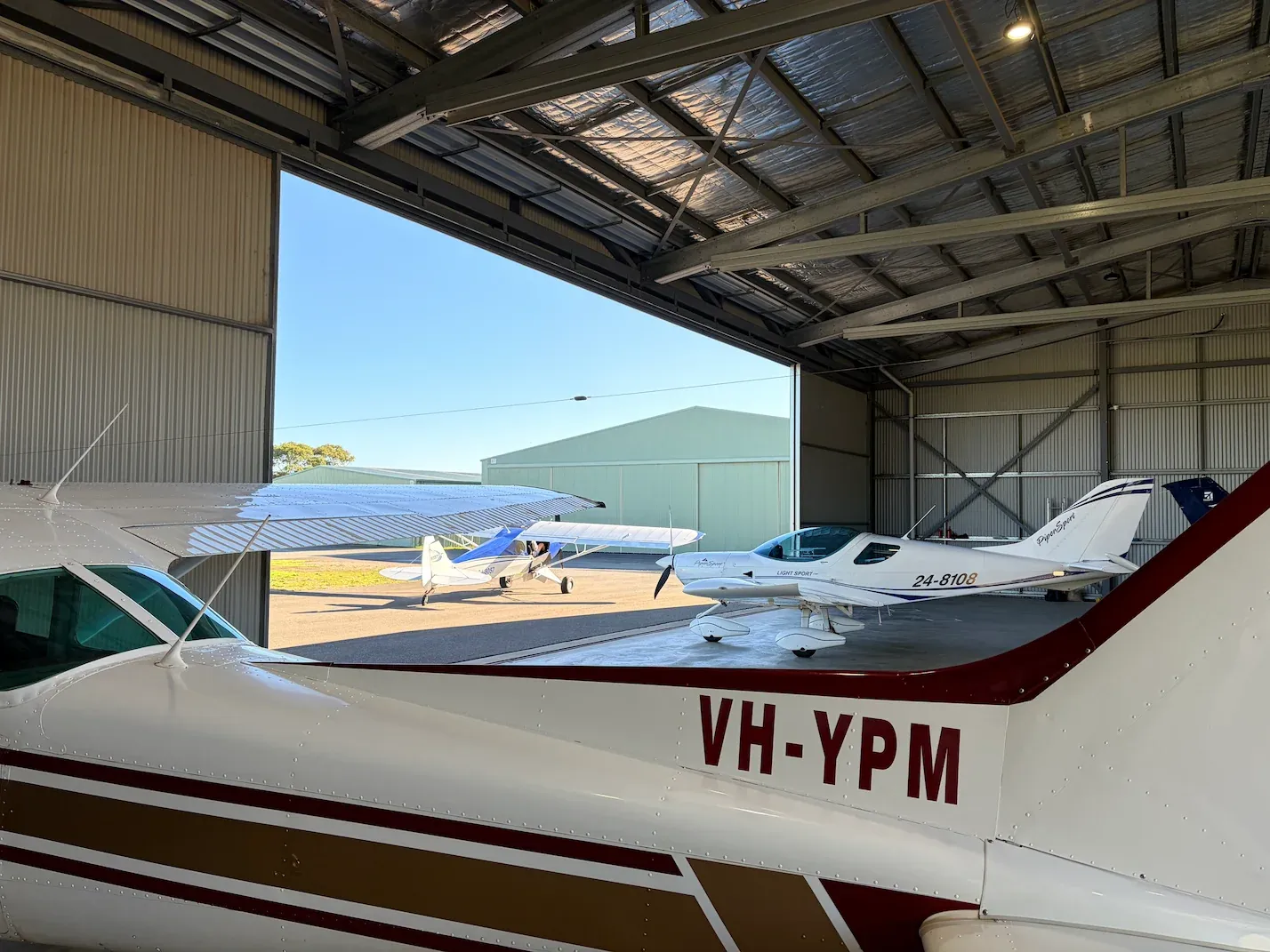
The fleet deserves a note beyond the runway discussion. The author flew the Piper SportCruiser 24-8108, fitted with a traditional six-pack steam-gauge panel — a genuine advantage for a student who wants to build scan skills transferable to other legacy GA aircraft. Lite Air plans to upgrade this aircraft to a full Garmin G3X glass cockpit later in 2026. The other SportCruiser in the hangar already has a glass cockpit, and students have the option to choose which panel they train on.
Pillar 4 — Instructor quality
Verdict: Strong.
The school's website names no instructors — a significant transparency gap that would normally make this pillar unassessable. But personal experience fills that void.
Ron Logan is the CFI. He came to aviation from a career at HSBC — an unusual path that means he runs Lite Air with the operational discipline of someone who spent decades in institutional banking, not the casual approach that can characterize small owner-operated schools. He is described as a legendary figure in the local flight community, and the author wrote a public tribute to him on LinkedIn.
Logan's teaching approach, based on the author's 15 hours with him, is methodical and structured. Every lesson had a clear brief, an objective, and a debrief. He gave students options — the author chose to fly the steam-gauge SportCruiser despite a glass-cockpit aircraft being available, and Logan supported that choice without pushing the newer panel. The student felt they were treated as a pilot working toward a specific goal, not a billable hour.
The fleet upgrade plan — a Garmin G3X for the second SportCruiser — signals that Logan is investing in the training environment, not running it on minimum viable equipment. That's a data point that matters more than years-of-experience numbers.
What remains unpublished: any information about other instructors, supervision structure, or continuity policy. For students who can't fly with Logan personally, the quality of the broader instructor team can't be assessed from public sources.
Pillar 5 — Overseas readiness
Verdict: Not on offer (but workable with planning).
Lite Air's website contains nothing about international students. No visa guidance, no accommodation options, no transfer logistics, no pre-arrival theory, and no cap on overseas enrolments. A prospective student from Singapore, Hong Kong, or elsewhere cannot base a decision on what the site publishes.
In practice, the author — a Singapore-based pilot — trained there successfully. The key was communication: contacting the school months in advance, explaining the timeline and goals, and getting confirmation that the schedule was feasible. The school was responsive and accommodating. But that's a personal experience, not a published policy. Another international student might have a different outcome depending on timing, aircraft availability, and instructor workload.
The practical takeaway: Lite Air can work for international students who are organized and proactive about planning. It will not work for students who need visa sponsorship, structured accommodation packages, or a published overseas student policy before they commit.
The Magenta take
Lite Air's strength is the part the website doesn't sell. Ron Logan runs a methodical, structured school with a genuinely interesting training environment — multiple runways, right-hand circuits on three directions, and a rare steam-gauge SportCruiser alongside a glass-cockpit option and a tailwheel Carbon Cub. For a student who wants to build real stick-and-rudder and scan skills, that mix is hard to find.
The gap is in the lack of details on the website. The site publishes its hourly rates and honest hour ranges, but names no instructors, maps no syllabus, gives no all-in budget scaffolding, and says nothing to overseas students. A prospective student reading the website alone cannot see who they'll fly with or what the certificate will actually cost. Much of what earns this profile its verdicts came from the author's time on the ground, not the public page.
If Lite Air published instructor detail, a simple syllabus map, and a worked cost example alongside its rates, the public profile would match the quality of the training. The flying is the strong part; the publishing is what's missing.
Who should train here
- Students who want a small school with a genuinely interesting training environment — multiple runways, right-hand circuits, a choice between steam-gauge and glass-cockpit SportCruisers or a tailwheel Carbon Cub — and a gracious CFI with an unusual depth of operational experience
- Returning pilots with a specific goal (like a passenger endorsement in a tight window) who can coordinate ahead of time with the school directly
- Students who value methodical, brief-objective-debrief instruction over a high-volume training line
Who should look elsewhere
- Students who need published instructor credentials, detailed syllabus breakdowns, and operational policies before they commit
- International students who require visa sponsorship, accommodation packages, or formal overseas student support
- Students optimizing for a single up-front RPC price — Lite Air publishes hourly rates and leaves total cost to the student to estimate
How to contact
Address: Aldinga Airfield, 174 Colville Road, Aldinga SA
Phone: +61 455 515 338
Website: liteairflyingtraining.com.au
Email: admin@liteairflyingtraining.com.au
Airfield: Aldinga Aviation (YADG)
