Sunshine Coast Aero Club (Marcoola, Australia)
SCAC has been training pilots since 1959 from a towered Class D field at YBSU. Its draw is the airspace — RPC students operate in and out of controlled airspace, with onward GA training (RPL→CPL) routed through partner Inspire Aviation.
The school in one paragraph
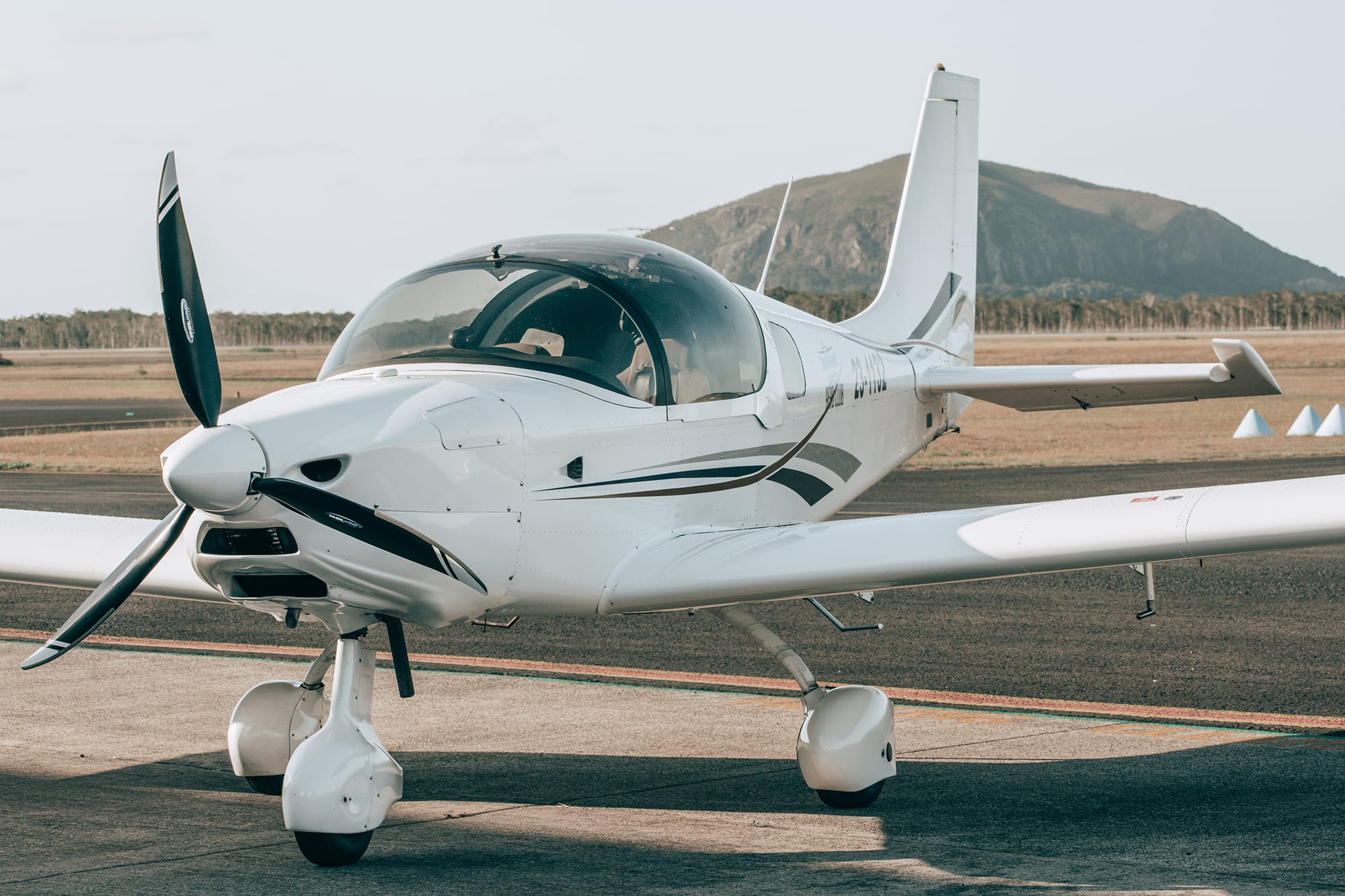
Sunshine Coast Aero Club is a member-based club and flying school at Sunshine Coast Airport (YBSU) in Marcoola, operating at the field since 1959. It delivers RPC training in-house under RAAus, with RPL→CPL and ratings routed through co-located partner Inspire Aviation (CASA Part 141 FTO.0343), and runs a Sling 2 plus a WT9 Dynamic for advanced endorsements and hour-building in a towered Class D environment.
How we assess schools
Magenta Standard profiles evaluate flight schools across five pillars. Each pillar maps to a decision a prospective student is actually making.
- Pathway clarity — whether a student can map the full route from enrollment to license: hour ranges, exams, endorsements, what comes after RPC
- Cost integrity — whether pricing is upfront, with all-in numbers a student can budget against without phoning the school
- Training environment — whether the airport, airspace, fleet, and weather actually support efficient training, or eat into the hours a student is paying for
- Instructor quality — who teaches, what their qualifications are, and how supervision is structured
- Overseas readiness — for schools accepting international students: visa guidance, accommodation, transfers, pre-arrival theory, and cap discipline
This profile is based on a structured review of Sunshine Coast Aero Club's public website, the Inspire Aviation partner site, the RAAus directory, and official airspace and airport documentation. No in-person visit. The school's Chief Flying Instructor, Michael Xeni, confirmed pricing and aircraft status by direct correspondence.
Pillar 1 — Pathway clarity
Verdict: Moderate.
The Pathways page sets out the four main routes a student might take — RPC, RPL, PPL, CPL — and labels which require RAAus (in-house) versus GA (Inspire Aviation, CASA Part 141 FTO.0343). The hand-off between the two sides is explicit: a student starting in the Sling 2 earns an RPC under RAAus, converts that to an RPL on the GA side, then progresses to PPL and CPL in a Cessna 172 or the WT9 Dynamic. Endorsements available within the RPC — navigation, tailwheel, manual propeller pitch, retractable gear — are listed in plain text.
What is not published: a guide to “how long this usually takes here.” Individual hours vary, and it wouldn’t be responsible to promise a single number, but most schools can still share typical ranges and a simple syllabus/schedule map to help students plan.
The one regulatory point that is published and matters: RPC holders are permitted to operate in and out of YBSU's Class D airspace under exemption EX65/25, which applies to the flight school's aircraft. Training is explicitly geared toward preparing students to operate under that exemption — a useful and unusual capability for an RPC-only license.
Pillar 2 — Cost integrity
Verdict: Partial. Sling 2 rates are published on the school's Fleet page — AU$360/hr dual and AU$250/hr private hire — and the school takes the position that total RPC cost depends on each student's hour count, so no package figure is published. That stance is defensible: students progress at different speeds, and it wouldn’t be responsible to promise a single “complete” RPC cost. But even with variable hours, a student still needs a clear view of what is included versus billed separately to estimate a realistic total budget. The school confirmed to us that the WT9 Dynamic will be AU$415/hr once it goes on-line, pending a cross-hire agreement between the owners and the flying school. That rate is not yet on the school's website.
What is missing:
- Theory, briefing, exam, and landing fee inclusions — whether AU$360/hr covers ground briefings and the RPC theory exams, or whether those are billed separately
- GA-side pricing — RPL, PPL, and CPL training rates run through Inspire Aviation and are not on the Sunshine Coast Aero Club site or the Inspire site in a way a student can find quickly
- RAAus and club membership fees — these are mentioned but not stated
A prospective student cannot estimate an all-in RPC budget from the website alone.
Pillar 3 — Training environment
Verdict: Strong, but for different reasons than most RAAus schools. Sunshine Coast Aero Club's edge is the airspace, not the flow.
YBSU is a towered Class D airfield during tower hours, with one sealed runway (13/31, 2,450m asphalt) shared with commercial RPT traffic. Jetstar, QantasLink, and Virgin all schedule flights through the terminal — this is a real regional airport, not a quiet GA field.
For a recreational pilot, that is normally a drawback: ATC sequencing eats into expensive flight time, and a single runway removes the option of choosing wind for crosswind training. Sunshine Coast Aero Club turns the drawback into the curriculum. Under exemption EX65/25, RPC students operate in and out of controlled airspace in the school's aircraft from early in their training. By the time a student is solo, the radio workload, the clearances, and the sequencing alongside Jetstar and Virgin departures are not novelties — they are background.
The trade-off is real. A student paying for circuits will, on a busy day, spend more time taxiing and holding short than the same student at Caloundra or Gympie. The single runway means crosswind exposure is dictated by the day's wind, not by instructor choice.
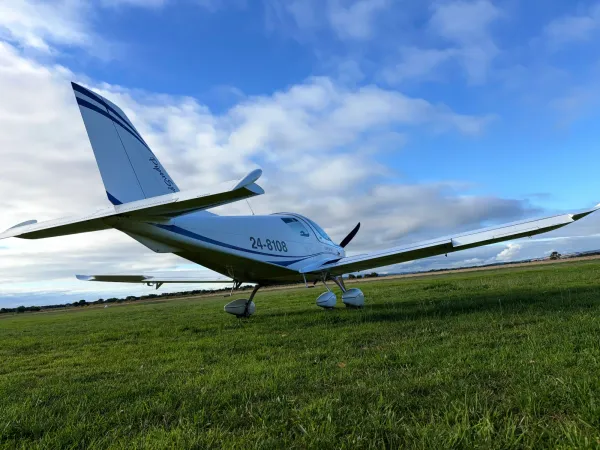
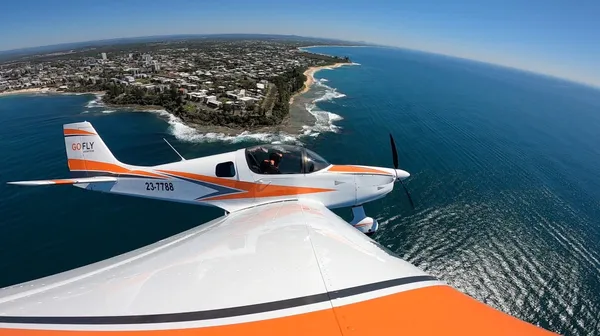
The Sling 2 is the RAAus ab-initio trainer at AU$360/hr dual on the school's Fleet page. The WT9 Dynamic is the harder-to-find piece: a sleek European RAAus-registered two-seater with a constant-speed unit and a cruise above 160 knots, used for the in-flight adjustable propeller endorsement and as a CPL hour-building platform that meets CASA's requirements for cruise speed and complexity. For a student aiming at CPL, having the complex-aircraft endorsement available under RAAus rates is a genuine cost saving versus moving to a CSU-equipped GA aircraft for the same hours.
Pillar 4 — Instructor quality
Verdict: Limited public detail. The website names four instructors and an operations manager; none of the instructors have published bios, qualifications, flight hours, or instructor grades.
From the home page, the team is:
- Michael Xeni — Chief Flying Instructor (confirmed by direct correspondence), RA CFI and GA Instructor
- Teresa Pesic — Operations Manager (named in student testimonials as the membership and front-of-house point of contact)
- Ed Giraldes — Senior RA Instructor
- Jason Pitman — Senior RA Instructor
- Sunny Adhikari — Senior RA Instructor
The team page shows photos but does not publish individual bios, RAAus instructor ratings (Grade 1, 2, or 3), CASA flight instructor ratings for those on the GA side, total flight hours, or career background. A student cannot tell from the website whether their RPC will be flown with an instructor who has 500 hours or 5,000, or whether the CFI personally signs off flight tests.
The supervision structure is also not stated. Whether students are paired with a single instructor across a training block, whether instructors rotate, and how flight test approvals are managed aren’t stated.
The Inspire Aviation side, which carries the GA training under CASA Part 141 FTO.0343, also lists no individual instructor bios on its public pages at time of writing.
Pillar 5 — Overseas readiness
Verdict: Not on offer. Sunshine Coast Aero Club does not publish an international student program. There is no visa guidance, no accommodation listing, no airport transfer arrangement, no pre-arrival theory access, and no concurrent international student cap. The school does not appear to market to overseas students, and we are not assessing it on this pillar.
A Singaporean or Hong Kong student could, in principle, train here on a tourist visa and bank the radio and CTA experience that schools at uncontrolled fields cannot offer. But the logistics — accommodation, the Inspire Aviation handoff for any GA continuation, total program cost — would all need to be assembled by the student. There is no published path.
The Magenta take
Sunshine Coast Aero Club is the kind of school that doesn't fit cleanly into a brochure but makes structural sense for a specific kind of pilot. The Class D airspace is the headline feature: a recreational student who trains at YBSU will, by the time they have an RPC with navigation endorsement, have more radio time and more controlled-airspace exposure than a counterpart at a quieter field. That is genuinely useful experience for anyone who plans to fly cross-country in Australia, and it is a meaningful head start for any student who later moves into GA, the airlines, or the commercial side.
Sunshine Coast Aero Club publishes a Sling 2 dual rate, a fleet, a pathways summary, and a list of five instructor names. A student on the website cannot see what the RPC will actually cost, who they will fly with, or what the weekly rhythm looks like. The Magenta Standard rewards schools that publish those answers.
If the school chose to publish individual instructor bios and a WT9 rate alongside the Sling 2 rates, this would move from a Moderate to a Strong overall profile. The bones are there — 65 years of operation, a real CFI, a meaningful airspace advantage, a proper second aircraft for advanced training, and a club model that builds community around the airfield.
Who should train here
- Australian domestic students based on the Sunshine Coast, Brisbane, or southeast Queensland who want CTA-fluent training from day one
- Students planning to continue to CPL who want their early hours done in controlled airspace rather than learning Class D radio after the fact
- RPC pilots in the region who want to build cross-country and complex-aircraft hours in the RAAus-registered WT9 Dynamic
- Career-track students who value the in-house RPC → RPL → PPL → CPL handoff through co-located Inspire Aviation (CASA Part 141 FTO.0343)
- Pilots who want a club and community to belong to — Friday night socials, a bar, an aircraft viewing area, and 65 years of institutional memory
Who should look elsewhere
- Students who want a single up-front RPC price — Sunshine Coast Aero Club publishes hourly rates and treats total cost as a function of each student's hour count
- Overseas students looking for a structured 3-week international program with visa, accommodation, and transfer support — that is not what this school is set up for
- Students who want to read detailed instructor bios and choose an instructor before enrolling
- Pilots optimising purely for circuit count per hour — a single runway shared with RPT traffic will trade flight time for ATC sequencing on busy days
- Students who want to train at an uncontrolled field with no tower workload — an uncontrolled field such as Caloundra, Gympie, or Watts Bridge is better suited
How to contact
Address: 16 Friendship Avenue, Marcoola QLD 4564
Email: admin@scacq.com.au
Phone: 07 5448 8458
Hours: Monday–Sunday, 8am–5pm
Website: sunshinecoastaeroclub.com.au
GA partner: Inspire Aviation (CASA Part 141 FTO.0343, co-located at YBSU)