
VKBSim T-Rudder Mk.V review: The best mid-range rudder pedals, with one GA asterisk.
These rudders deliver exceptional yaw control in a compact, stable footprint — smooth enough to build real coordination habits from day one. The problem: no toe brakes, which leaves GA students without the full feet workflow they will eventually need to train.
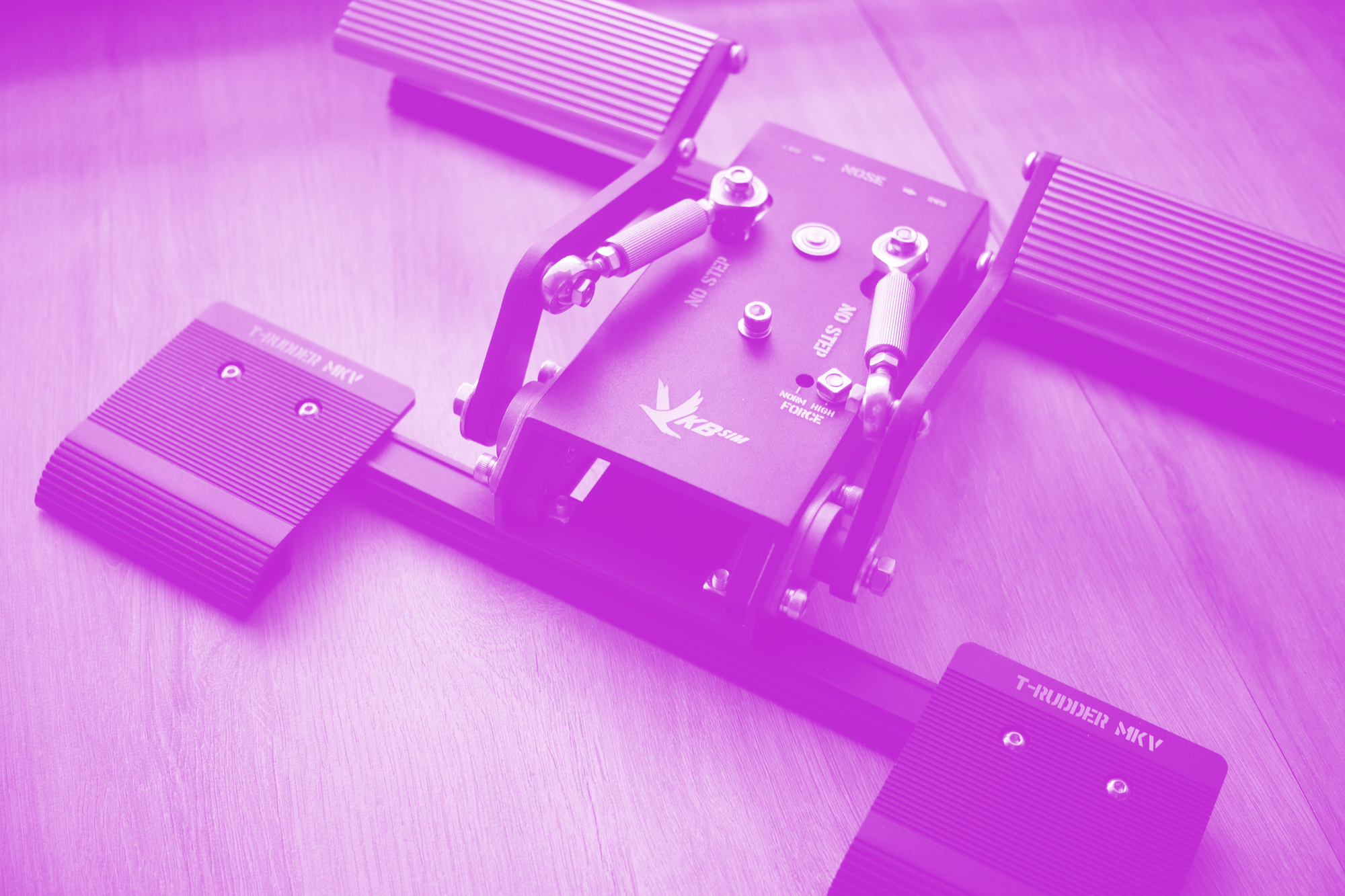
Rudder pedals are one of the few pieces of sim hardware that directly change how you fly. Not because they look like a cockpit, but because they make your feet do what a pilot's feet actually do.
If you are a student pilot using Microsoft Flight Simulator 2024 or X-Plane to build GA habits, a dedicated rudder pedal set is a high-leverage upgrade. It moves yaw control from a twist axis or keyboard tap to something you can feel and repeat.
The VKB T-Rudder Mk.V aims straight at that promise. The smoothness and stability are real. The constraint is the missing toe brakes. In a GA, your feet do two things: control yaw and manage differential braking. These pedals do one of them exceptionally well.
What this is
The VKB T-Rudder Mk.V is a compact, all-metal rudder pedal set built for precision and long-term durability – a continued improvement since the first version was released in 2014. It connects via USB and works as a standard rudder axis input across major PC sims.
There is no toe brake axis. That is a deliberate design choice, not an oversight.
Specifications
- Construction: Steel frame, aluminum heel pads
- Bearings: 12 ball bearings
- Sensor: Contactless MaRS sensor
- Cam: Reversible — hard-center or soft-center detent (user-selectable)
- Axis: 1 analog axis (z-axis rudder only)
- Dimensions: 38cm wide × 21cm deep × 9cm high
- Weight: ~2.7 kg
- Includes: BlackBox 3 controller, 180cm RJ-45 cable, 180cm USB 2.0 cable
- Compatibility: BlackBox 3 only — not compatible with BlackBox Mk.1 or Mk.2
- Warranty: 2 years
This is what you should expect in practice
- Light mechanical assembly out of the box — basic tools included, done in under 15 minutes
- Plug-and-play recognition in MSFS 2024, X-Plane, and DCS without additional drivers
- Extremely smooth pedal action from day one
- Stable floor placement that does not require adhesive strips or clamps
One note on the ecosystem: the T-Rudder Mk.V ships with the BlackBox 3 — VKB's 32-bit ARM MCU Hi-Speed USB controller hub. It is not compatible with the older BlackBox Mk.1 or Mk.2. If you are upgrading from a Mk.IV T-Rudder setup, check compatibility before assuming your existing BlackBox will work.
The BlackBox situation is worth a candid note. It is a standalone unit that sits separately on your desk, and it is not a universal VKB hub. The VKB Gladiator NXT, for example, plugs directly into USB and has nothing to do with the BlackBox at all. If you are building a mixed VKB setup, do not assume these devices share an ecosystem — they do not. The BlackBox is specific to the T-Rudder and select Gunfighter models only.
Out of the box
The packaging is clean and considered. The pedals arrive well-protected, and the unit feels immediately serious in hand — all-metal construction, no obvious shortcuts. Note that at the corners of this device can be quite sharp.
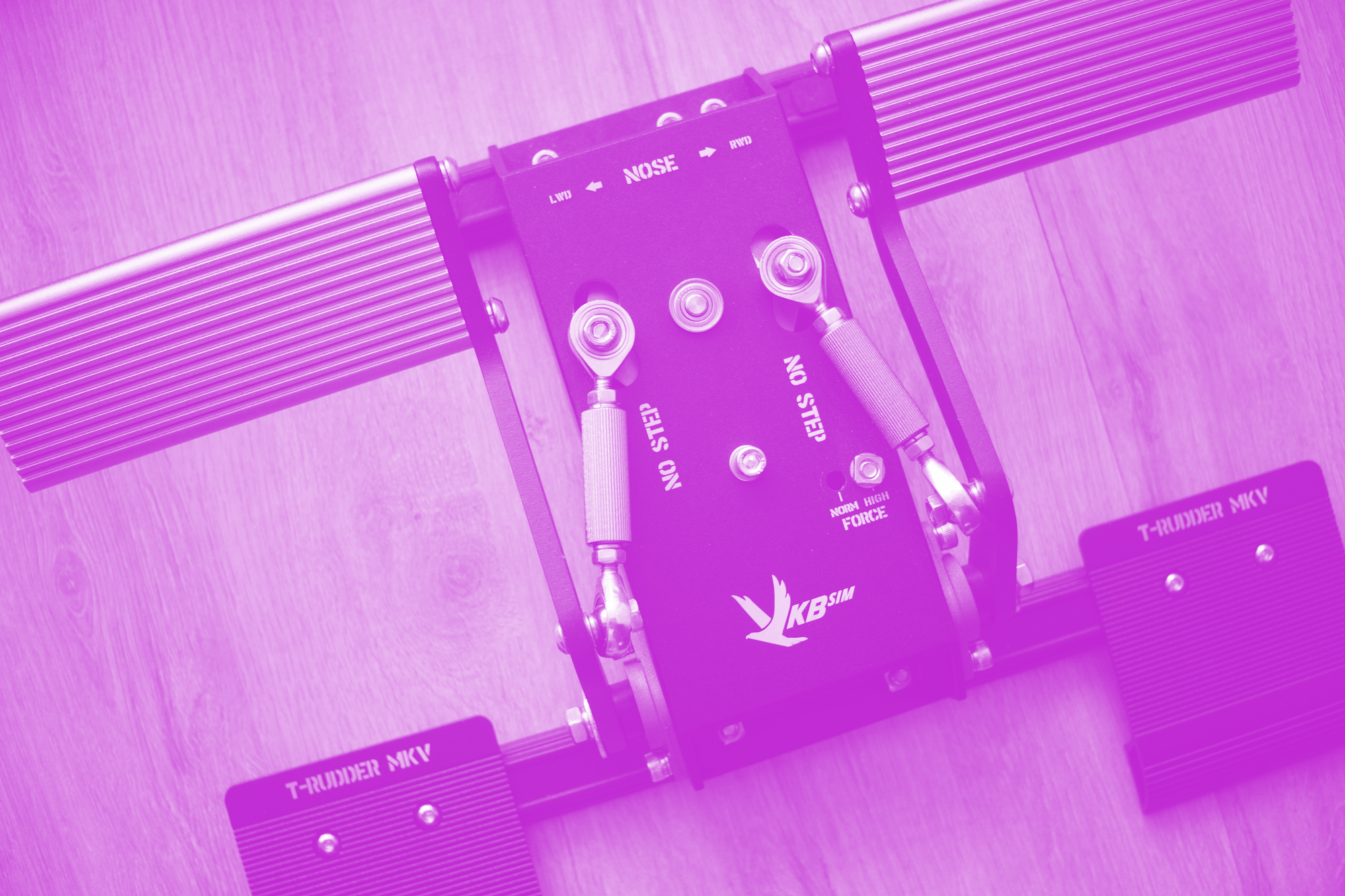
Then you get into assembly.
- Foot bearing adjustment requires selecting a preset notch for your foot size and securing it with an included M4 screw
- Support shafts install with a spring washer and a hex tool or screwdriver, both included
- The process is low complexity but it is assembly, not plug-and-play out of the box
At US$232.70 shipped via AliExpress, the build quality signals match the price. This feels like a finished product. There is no mold flash, no creaking enclosure, no hollow knock when you press on the chassis. That matters because build quality at unboxing predicts long-term reliability during training.
One legitimate concern: the flat foot pads. There is no curvature to anchor your heel, which means during longer sessions, feet can drift slightly. It is a minor ergonomic gap on an otherwise well-executed unit.
Setup and first-use reality
Setup is simple.
- Assemble the foot bearings and support shafts using the included hardware
- Plug in via USB — recognized immediately in Windows and major sims
- Bind the rudder axis in your sim of choice
VKB's VKBDevCfg software is available for calibration and axis tuning, but it is optional. I did not need it to get going in MSFS 2024.
One tip: if you are using MSFS 2024, confirm that "Assisted Controller Sensitivity" is turned off. Assisted settings can mask the pedal's actual response curve and undermine the precision you paid for.
On noise: earlier VKB T-Rudder models (Mk.IV) had a known spring whine under load. The Mk.V is silent. This comes up frequently in forum searches — if you are reading this after seeing that complaint, it does not apply to the version reviewed here.
Where training friction shows up (and why it matters)
A training device needs two things: reliable inputs and repeatability. These pedals are strong on both — with one structural limit.
- No toe brakes. In a GA, differential braking is part of the feet workflow: taxi speed control, tight turns on the ground, run-up positioning, stopping distance on rollout. None of that can be rehearsed here. My solution: a dedicated yoke button bound to brakes. It works, and it is a reasonable workaround for sim use — but it is a workaround. You are pressing a button where a real pilot pushes a pedal, and that motor split does not disappear with practice
- Flat foot pads. Heel stability is not a crisis, but it is noticeable over a long session. A slight concave curve would remove the need to consciously manage foot placement
- AliExpress shipping. The route to purchase is not as direct as buying from a regional distributor. Lead time and import costs vary. Factor that into total cost planning
- Long-term maintenance note. The nuts connecting the pedal arms to the body can loosen with use over months of regular sessions. If you notice any play developing in the arm joints, a small drop of blue Loctite on the threads fixes it permanently. Check this at the three-month mark. It is a minor fix, but worth knowing before it affects your reps.
These pedals stay put on the floor under normal use. Repeatability — session to session, position to position — is a genuine strength.
The Magenta Standard evaluation
Every piece of hardware reviewed by Magenta is audited against five pillars to ensure it functions as a procedural training device, not desk decoration. The point is not immersion. We are looking for procedural skills transfer.
The Magenta Standard Evaluation
Every piece of hardware reviewed is evaluated against five professional criteria to ensure it serves as a true procedural training device.
| Criteria | Evaluation Logic |
|---|---|
| 01 Mechanics | Does the hardware mimic the physical forces and control travel found in real General Aviation aircraft? |
| 02 Tactility | Does it support eyes-outside operation through distinct physical feedback and ergonomic positioning? |
| 03 Integration | How seamlessly does the device interface with Electronic Flight Bags (EFB) and professional training software? |
| 04 Procedural | Does the hardware support the muscle memory needed for actual syllabus requirements and cockpit checklists? |
| 05 ROI | Does the measurable gain in proficiency justify the hardware cost compared to wet-hire aircraft rental hours? |
WANT TO DIVE DEEPER? VIEW THE MAGENTA STANDARD →
1. Mechanics: does it mimic real aircraft control travel and resistance?
Verdict: Smooth and precise, but the feel is closer to anti-torque pedals than classic GA rudder geometry
The action is exceptional. Each pedal movement is smooth, linear, and consistent — no stiction, no dead zone, no sudden lightening as you approach center. The contactless MaRS sensor picks up small inputs accurately, which supports fine yaw corrections rather than gross over-controlling.
The caveat is the feel profile. The T-Rudder moves like helicopter anti-torque pedals — smooth and pendulum-like — rather than the slightly stiffer, more mechanical resistance of a GA rudder. For most students this is a non-issue. If you have real GA time and are specifically trying to replicate that pedal feel, be aware the sensation will not be identical.
There is also a physical motion difference worth flagging. Conventional rudder pedals use a push-forward movement driven from the knee and leg. The T-Rudder uses a push-down motion driven from the ankle joint. It took a few sessions to realize I was only using my ankles — not my whole leg — and I do wish there was slightly more leg travel in the design. For the price and the compact footprint, it is a compromise worth taking. But if you have real aircraft time and are used to full-leg rudder inputs, expect an adjustment period.
One genuinely useful feature here: the reversible cam. You can choose between a hard-center detent (more resistance at center, snaps back positively) or soft-center detent (lighter, more progressive return). The unit ships in soft-center by default. I found this too light and switched to hard-center, which gives a clearer sense of when you are holding a yaw correction versus returning to neutral — closer to real rudder behavior.
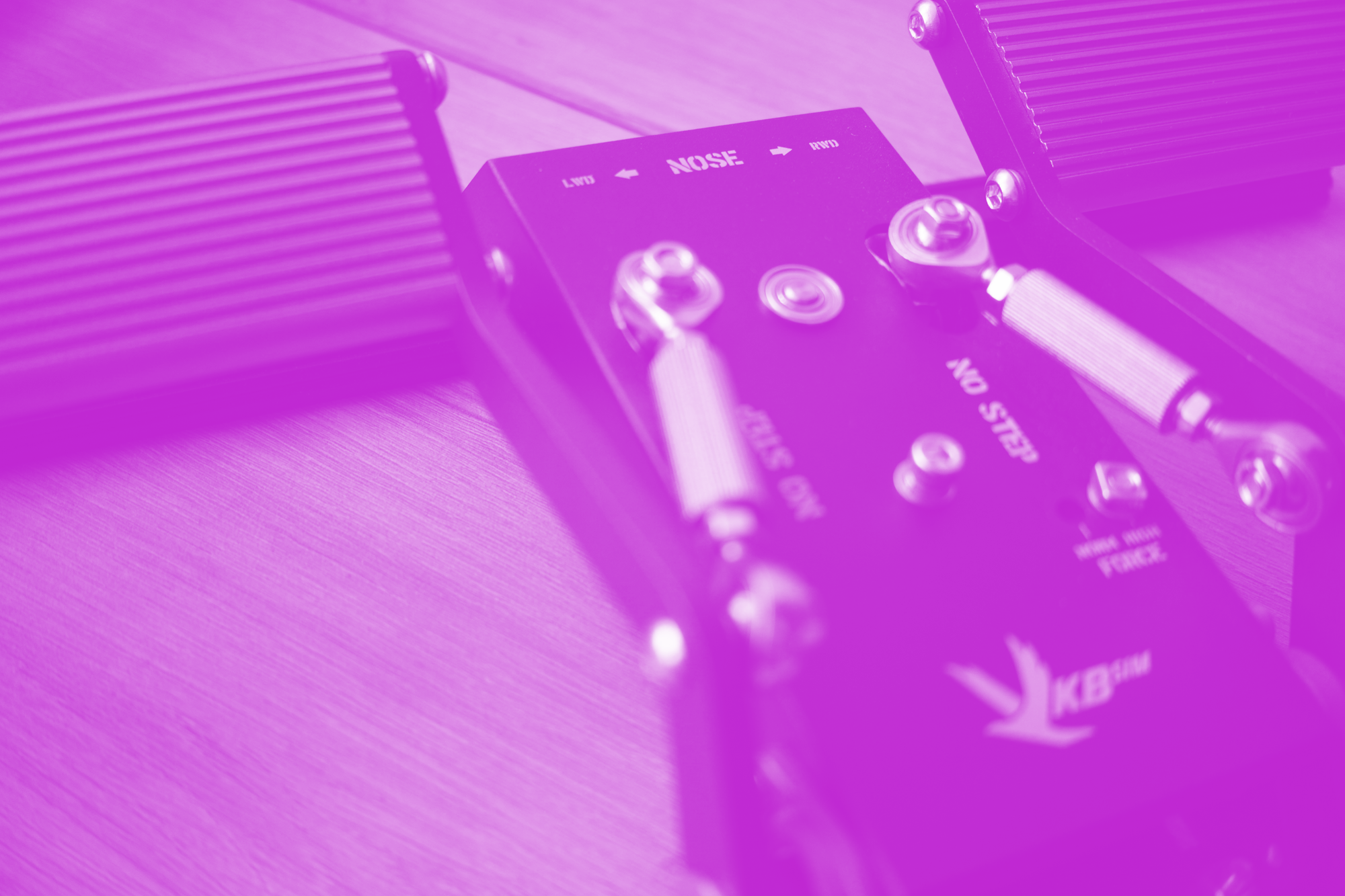
Here is the catch: switching the cam requires disassembling the unit. It is not a tool-free adjustment. VKB provides no printed instructions for this in the box, but the process is documented on YouTube and is manageable – about ten minutes of messing around.
- Sensor precision supports small, correct corrections during takeoff roll and crosswind work
- Resistance is consistent across full travel, which helps build reliable muscle memory
- Reversible cam lets you tune center feel to match your training preference
2. Tactility: can you operate it eyes-outside?
Verdict: Yes — the pedal feel is predictable enough that you stop managing your feet
In a real aircraft, you do not look at your feet. The T-Rudder supports that habit because the action is smooth and consistent enough that you learn to trust it quickly.
- There is no ambiguity in pedal position — center feel is clear, travel is linear
- After a few sessions, foot inputs become unconscious rather than deliberate
3. Operational integration: does it fit real pilot workflows and real desks?
Verdict: Strong repeatability because the pedals stay put, session after session
Integration for rudder pedals is simple: do they go where your feet go, and do they stay there?
The T-Rudder's compact footprint makes placement easy under most desks. More importantly, they do not slide. Under normal rudder inputs — including crosswind deflection and takeoff roll correction — the pedals hold position on the floor. That protects the rep quality that makes sim training worth doing.
- Compact enough to fit standard under-desk clearances
- No clamp, no adhesive, no DIY mounting required
- USB cable exits cleanly and does not restrict placement
- On a wooden floor, the weight combined with the rubber base pads means these do not move at all under normal use — and require deliberate effort to reposition when you need to adjust seating
4. Procedural value: does it make you better at flying?
Verdict: High value for yaw coordination, incomplete as a GA procedural trainer because braking is part of the feet workflow
A smooth, stable rudder pedal set directly improves the skills that matter most in early GA training.
- Centerline discipline on takeoff roll becomes a repeatable habit, not a correction reflex
- Crosswind correction in the circuit becomes smaller and earlier because the pedal response is precise
- Coordinated turns improve because the input cost of using the rudder drops
The procedural gap is real, though. In a GA, your feet manage both yaw and differential braking — and these two tasks overlap in ways that require practice. Taxi positioning, run-up turns, and rollout braking all involve the toe brakes. None of those workflows can be trained here.
If you map brakes to your yoke or a keyboard key, you are splitting a physical habit across two different motor patterns. That split does not exist in the real aircraft.
5. Price: is the ROI real?
Verdict: Yes — for a dedicated rudder upgrade, US$232.70 shipped is defensible
The ROI calculation for rudder pedals is straightforward. If you are currently using a twist axis on a joystick, a dedicated pedal set changes how you practice coordination. That habit transfer is worth real money in saved remedial dual instruction.
The T-Rudder sits in the mid-range. Cheaper options exist — Logitech and Thrustmaster both come in under US$100. They are functional but softer in construction and feel. The smoothness and precision gap is noticeable.
More expensive options — MFG Crosswind, Virpil R1-Falcon, Slaw — add toe brakes and typically cost US$350–500 or more. For GA students who want the full feet workflow trained in the sim, that step up is worth considering seriously.
The honest comparison: if you want toe brakes, the price difference to MFG Crosswind is roughly US$150–200 more. That is not nothing. But for GA training, the procedural case for that extra spend is stronger than it looks.
One regional note for US buyers: VKB ships direct from China, and as of early 2025, US import tariffs add approximately 35% to the base price — putting the real cost closer to US$270–300 before shipping. At that price point, the MFG Crosswind becomes a much more serious comparison. APAC buyers purchasing via AliExpress are not affected in the same way.
Magenta Debrief Flight Sim Reviews
Get the latest hardware and software reviews delivered to your inbox.
Verdict
The VKB T-Rudder Mk.V has the right philosophy. The smoothness and stability create real training reps. The lack of toe brakes prevents it from being an unqualified recommendation for GA students who want full procedural transfer on the ground.
Two things are true at once:
- Yaw coordination training value is among the best you can get at this price
- The missing toe brakes leave a procedural gap that GA students will eventually need to fill
Who should buy it
- Sim pilots upgrading from a twist axis who want the best possible rudder feel at mid-range pricing
- Students whose primary focus is coordinated flight, crosswind technique, and takeoff roll discipline
- Anyone who already has a separate brake solution and is not counting on the pedals to cover it
Who should skip it
- GA students who want their feet to do everything a real GA requires — including taxi, run-up turns, and differential braking on rollout
- Anyone building a training rig where the feet workflow needs to be complete before moving on
About this review
I purchased the VKB T-Rudder Mk.V via AliExpress for US$232.70 shipped. No sponsorship, no review unit, no affiliate arrangement. Tested over two months on MSFS 2024.