
Habits to break in 2026 if you’re a new pilot.
A practical guide to unlearning common early habits in training — from instrument fixation and “passenger seat” thinking to checklist rushing and ignoring discomfort — and what to replace them with instead.
New pilots often obsess over what to learn. Just as important is what to unlearn.
This guide is about the habits that quietly erode your confidence as a student or low‑time pilot — and what to replace them with before they harden into your “normal.”
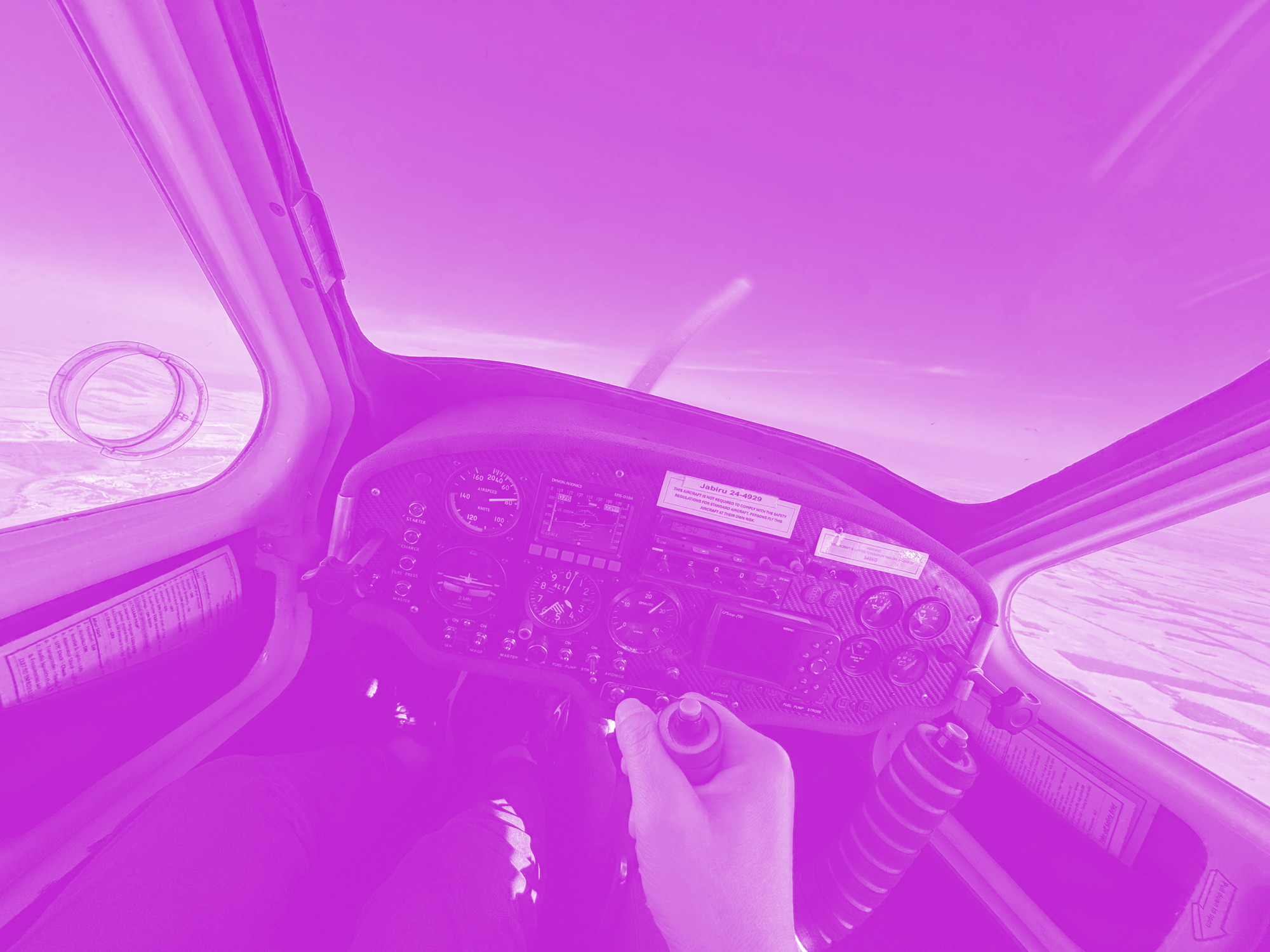
Stop staring at the panel and start flying the picture
The bad habit
Treating the instruments as the primary reference in visual conditions. Chasing numbers on the attitude indicator, airspeed and VSI, especially in the pattern and during maneuvers.
Why it hurts you
As a VFR pilot, our eyes are inside when they should be outside. You end up over‑controlling to fix tiny instrument movements instead of protecting the big picture: attitude, energy, traffic and runway alignment.
Better habit: outside first, panel second
- Fly pictures, not numbers: the nose on the horizon, the runway sight picture, the sound and feel of the airplane
- Let the panel confirm what your eyes and body already know, not lead the dance
- In the circuit, ruthlessly prioritize: runway and traffic → pitch and power feel → quick instrument cross‑check
Most of general aviation flying is, at its core, attitude flying: set the attitude, set the power, and let the airplane do what it was designed to do. Instruments are there to confirm that the picture you see out the window matches the numbers you expect, not to be the main event.
- When you study on the ground, pay attention to how the official handbooks (PHAK, AFH or your local equivalents) describe attitude flying; the same simple ideas show up in almost every maneuver you will ever do
If you catch yourself glued to the panel, deliberately look up and rebuild the outside picture before you touch anything.
Stop letting your instructor think for you
The bad habit
Waiting to be told what to do. Letting the instructor manage the plan, the checks and the decisions while you “just fly.”
Why it hurts you
You never build the cognitive habit of staying ahead of the airplane. Dual time turns into chauffeur time. When you fly solo, your brain has no familiar scaffolding to lean on.
Better habit: act like pilot in command, even on dual
- Narrate your thinking: "Next is downwind checks... traffic is clear... we're a bit high, so I'll reduce power"
- Brief yourself before each leg or maneuver: what am I about to do, what are my gates, what are my outs
- Form an opinion before you ask: "I'd go around here because X and Y. Do you agree"
- Ask questions while you are on the topic, not three weeks later at oral prep time; two extra minutes now are cheaper than a confused hour later
- If you do not understand an explanation, say so and keep asking until the picture clicks; basic questions about "obvious" things are usually the most important ones
You are not training to be an excellent passenger with hands on the controls. You are training your brain to own the flight.
Stop showing up unprepared and paying to be read to
The bad habit
Treating the airplane as the main classroom and your instructor as a paid audiobook. Turning up to each lesson having skimmed, not really studied, the material.
Why it hurts you
You burn expensive flight time just to hear someone read you what is already written, for free, in the official handbooks. Progress slows, costs climb, and you never build the study muscles you will need for every new rating and checkout.
Better habit: do the free work before the meter starts
- Prep for every lesson: know which maneuver or phase you are working on before you drive to the airport, and read the relevant sections in the official materials
- FAA world: the Pilots Handbook of Aeronautical Knowledge (PHAK), Airplane Flying Handbook (AFH) and the Airman Certification Standards (ACS)
- Local equivalent: your regulator's handbook, your school's syllabus, and your aircraft's POH
- Use a simple flow:
- Look up the maneuver or topic in the syllabus or ACS
- Check the references listed there
- Read those source documents, not just some random video or app
- Treat chair flying and reading as "free flight time": the more you learn on the ground, the faster and cheaper your hours in the air will add up
You are not paying your instructor to read a PDF you could have downloaded. You are paying for context, feedback and nuance that only show up once you have done the basic work yourself.
Stop accepting drift as “close enough”
The bad habit
Letting heading, altitude or airspeed wander because “we’re in the ballpark” and there is a lot going on.
Why it hurts you
You slowly train yourself to tolerate slop. Your sense of what “on speed” and “on altitude” look and feel like becomes blurry. Under stress, those small drifts turn into big deviations.
Better habit: small corrections, made early
- Set training tolerances that are tighter than the test standard
- Correct as soon as you see a trend, with the smallest possible input
- Treat precise flying as normal, not as a special checkride mode
Precision is not perfectionism. It is how you buy margin for the moments that really matter.
Stop rushing your checklists and flows
The bad habit
Treating checklists like paperwork you already “know,” so you skim, guess and keep moving to avoid slowing the flight down.
Why it hurts you
Important items — fuel, trim, mixture, flaps, doors, lights — become assumptions instead of confirmations. Distractions poke holes in your routine, and those holes quietly become your new normal.
Better habit: slow is smooth, smooth is fast
- Use a consistent flow, then back it up with the written checklist
- Let your brain set the pace, not your anxiety
- If you are interrupted, restart from the last clearly completed item, not where you think you left off
A disciplined, unhurried flow is one of the easiest ways to raise your safety floor as a new pilot.
Stop flying from the passenger seat
The bad habit
Deferring every meaningful decision: weather, go‑arounds, diversions, even basic “continue or stop” calls.
Why it hurts you
You never fully step into the role you are training for. When something feels off, you wait for someone else to notice or act. That is not how real‑world safety works.
Better habit: practice command while you still have training wheels
- Say what you think should happen next, then invite critique
- Call your own go‑arounds when the approach is not working
- After each flight, debrief your decisions, not just your stick‑and‑rudder skills
Command is a habit, not a license level. Build it early, while your instructor is still there to catch you.
Stop treating every flight like a test
The bad habit
Running constant commentary in your head: “That was terrible, my instructor must think I’m hopeless.” Avoiding the maneuvers you dislike because they expose your weak spots.
Why it hurts you
Your brain is busy defending your ego instead of learning. You unconsciously steer away from the edges of your ability, which are exactly where the growth is. Gaps in training, weather delays or a run of rough lessons can make it feel like the whole thing was a fantasy and you have "lost it." That story is seductive and completely unhelpful.
Better habit: fly lessons, not auditions
- Set a learning goal for each flight: "Today I want to understand X" instead of "Today I must nail Y"
- Ask for more reps on the stuff you dislike - that is where your future confidence lives
- Debrief like a coach: what worked, what did not, what you will try differently next time
- Expect dips: during a long training journey everyone has stale periods, bad flights and enforced breaks; they say nothing about your potential unless you decide they do
- When you hit a wall, cap the number of times you bash your head against the same maneuver in one lesson - three honest tries is usually enough; your brain will keep processing it between flights
You are building airmanship, not a performance review file.
Stop ignoring discomfort and the quiet little voice
The bad habit
Pushing down early warning signs: fatigue, mild airsickness, that sense of being rushed, your unease about weather or traffic. Telling yourself, “It’s probably fine, my instructor is okay with it.”
Why it hurts you
You train yourself to override the very signals that keep pilots safe. By the time the situation is obviously bad, your options have already shrunk.
Better habit: treat discomfort as data
- Say what you are feeling: "I'm starting to feel behind the airplane; can we slow this down"
- Normalize opting out: delays, turn‑backs and go‑arounds are signs of judgment, not weakness
- In debriefs, talk honestly about when you first felt uneasy, and what you did with that information
- Take basic care of the machine you are flying: sleep, food, hydration. Even mild dehydration can mess with your balance and comfort in bumps, and make you more vulnerable to airsickness and bad decisions
Good pilots are not fearless. They are honest early, and they act on that honesty.
Stop relying on one script for every situation
The bad habit
Using the same power settings, flap configurations and mental script no matter the runway, weight, wind or aircraft. When anything changes, your confidence collapses.
Why it hurts you
You are following choreography, not managing energy. The moment the script does not fit the scene, you feel lost.
Better habit: build a toolbox, not a single recipe
- After each lesson, ask: what principle were we really using - energy, drag, attitude, configuration
- With your instructor, deliberately try variations: different flap strategies, slightly different patterns, different approaches to the same runway
- Keep one or two "home base" techniques you know well, but understand why they work so you can adapt them
Flexibility is a safety feature. It starts with curiosity.
Stop forgetting that this is supposed to be fun
The bad habit
Letting anxiety and self‑criticism swallow the joy that brought you to flying in the first place. Comparing your progress to other students and always feeling behind.
Why it hurts you
When flying becomes a grind of self‑judgment, you fly less, learn slower and flirt with burnout right when you should be consolidating your skills.
Many pilots will tell you later that their PPL year was one of the best of their life - long summer drives to the airport with the same songs on repeat, a season where the world briefly shrank to runways, radios and the smell of avgas. You only get to be a student pilot once. Treat this as something to be savored, not just survived.
Better habit: protect your joy on purpose
- Keep a short log of wins after each flight - one thing you did better than last time
- Mix in flights that are explicitly about enjoyment once you are safe to do so: a local scenic, a breakfast run, a favorite maneuver
- Once you are safe and signed off for it, mix in the occasional "fun flight" with your instructor: a short scenic, a breakfast run, or a visit to a nearby field you have never seen before. Those hours still count, and they remind you what all the pattern work is for
- If you train in a club environment, spend time around other pilots. Sitting in the right seat on someone else's flight, or just riding along, can reconnect you with the joy of being in the air without the pressure of performing
- Build tiny rituals that anchor the memory: the playlist you drive with, the café you debrief at, the notebook you only use for flying
- When you hit a plateau or pause in training, remind yourself that this is just one chapter in what will become a very nostalgic story, not the whole book
- Remember that no one starts out "a natural"; the pilots you admire just stacked small, boring reps over time
If you can stay curious, honest and just serious enough, the good habits will compound quietly in the background.
And one day, you will look up on downwind, feel the airplane trimmed and stable under your hand, and realize that the person flying it is no longer a passenger with a logbook - it is a pilot.